UFC Partners With Polymarket
Prediction markets are adding another layer to the fight experience: a running picture of what traders think will happen next.
Dana White’s UFC is bringing prediction market data into its broadcasts through a partnership with Polymarket.
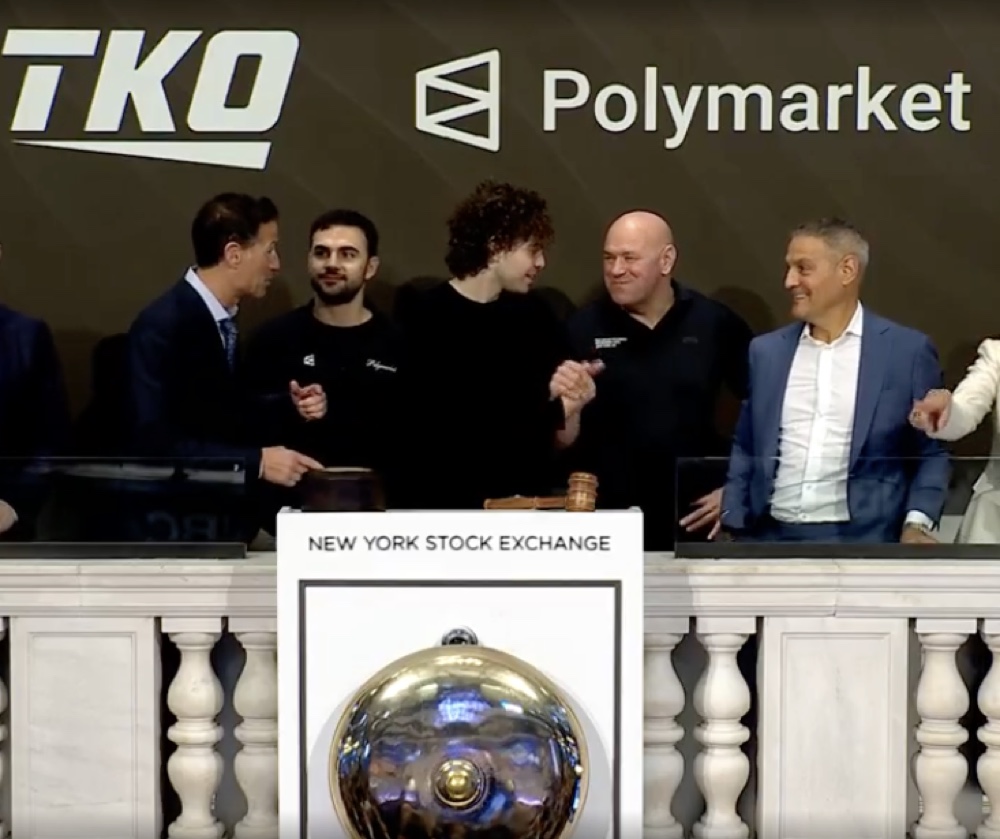
Announced on November 13, 2025, the multiyear agreement made Polymarket the exclusive prediction market partner of UFC and Zuffa Boxing. Its centerpiece is a live Fan Prediction Scoreboard, designed to show how expectations change as a fight unfolds.
What will viewers see?
The scoreboard is designed to turn market predictions into an additional piece of broadcast information. Alongside the action, viewers can see how traders are forecasting the outcome.
The companies also announced plans for arena experiences and a social series called Matchup Predictions – Who’s Next?, exploring potential opponents for fighters after their victories.
The broadcast display and the trading platform serve different purposes. Viewers can follow the predictions without placing a trade, while the underlying market involves people putting money behind their expectations.
How do prediction markets work?
On Polymarket, participants buy and sell shares tied to possible outcomes.
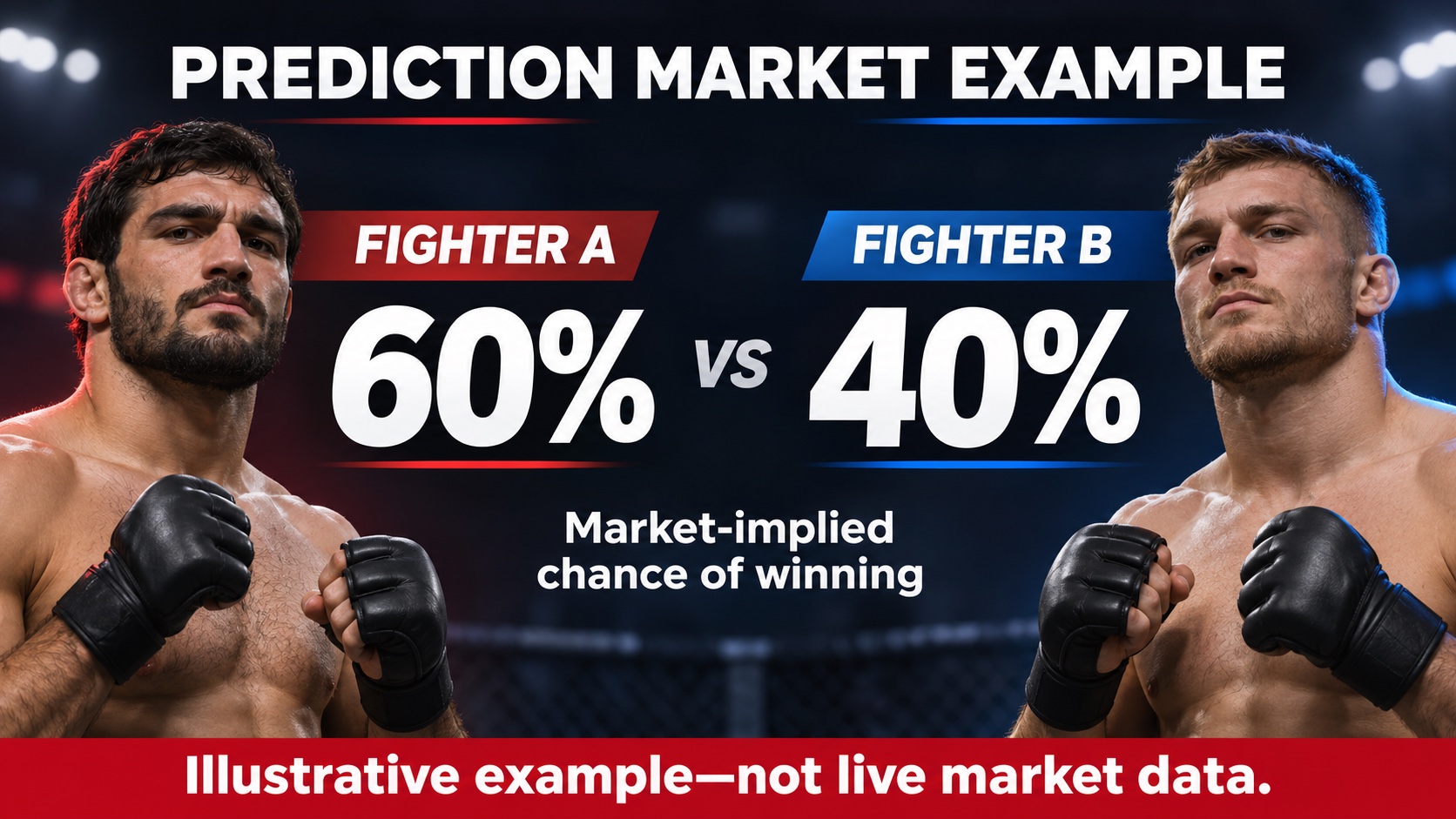
For a simple illustration, imagine a market asking whether a particular fighter will win. A “Yes” share priced at 60 cents suggests a market-implied probability of roughly 60%. Shares tied to the correct outcome settle at $1; losing shares settle at zero.
Those prices change as people buy and sell. They reflect trading activity rather than a percentage chosen by UFC or Polymarket.
 Open full-size prediction-market example (new tab)
What has happened since the announcement?
Polymarket’s presence has expanded into event branding.
UFC’s official materials identified its November 14, 2026, Madison Square Garden event as Polymarket UFC 334: Gane vs Hokit. That gives the partnership visibility beyond a prediction graphic during a broadcast.
What the numbers can—and cannot—tell you
A prediction percentage represents the market’s expectations at a particular moment. It is not an official judges’ score or a guaranteed result.
It also does not mean that the same percentage of all UFC fans agree. These numbers come from market prices, rather than a survey in which every viewer gets one equal vote.
That distinction matters. A fighter can look strong to the audience while traders interpret the action differently.
Why this matters beyond UFC
Our view: the interesting development is how prediction data can become part of the viewing experience.
Sports broadcasts already help audiences interpret the action through statistics and commentary. Market expectations offer another perspective—one that can change as events unfold.
The UFC partnership illustrates how prediction markets can serve two roles at once: a place where participants risk money on outcomes, and a source of information that other people can simply watch.
For viewers, that creates another question to follow during a fight: How is the market reacting to what we’re seeing?