PancakeSwap Expands Its Reach — Giving 88% of Trading Fees to Users Who Help Power the Exchange
PancakeSwap expanded its 88% share of eligible trading fees for liquidity providers to eight more blockchains. Here’s how it works.
PancakeSwap, a popular cryptocurrency trading platform, announced on November 12 that it is expanding a new program that gives 88% of eligible trading fees to the people who help make trading possible.
The program, called "The Flip," now includes eight additional blockchain networks.
What Is PancakeSwap?
PancakeSwap is a decentralized cryptocurrency exchange. That simply means it's a place where people can exchange one cryptocurrency for another without using a traditional exchange company to handle their trades.
Instead, PancakeSwap uses blockchain technology and automated software to make trading possible.
How Does PancakeSwap Work With Different Blockchains?
PancakeSwap operates on several blockchain networks, including Ethereum, Base, Arbitrum, Arc, Monad, Linea, ZKsync, and opBNB.
Think of PancakeSwap as a business with locations in different cities. Each blockchain is a different location where PancakeSwap offers its trading services.
The new 88% fee-sharing program has now expanded to eligible v3 and Infinity liquidity pools on all eight networks.
What Is a Liquidity Provider?
For people to trade cryptocurrencies, there needs to be a supply of those cryptocurrencies available.
That's where liquidity providers come in.
These are people who deposit their cryptocurrencies into shared pools that others can use for trading.
Think of a currency exchange booth at an airport. It needs a supply of different currencies so travelers can exchange their money.
PancakeSwap works similarly, except everything happens digitally.
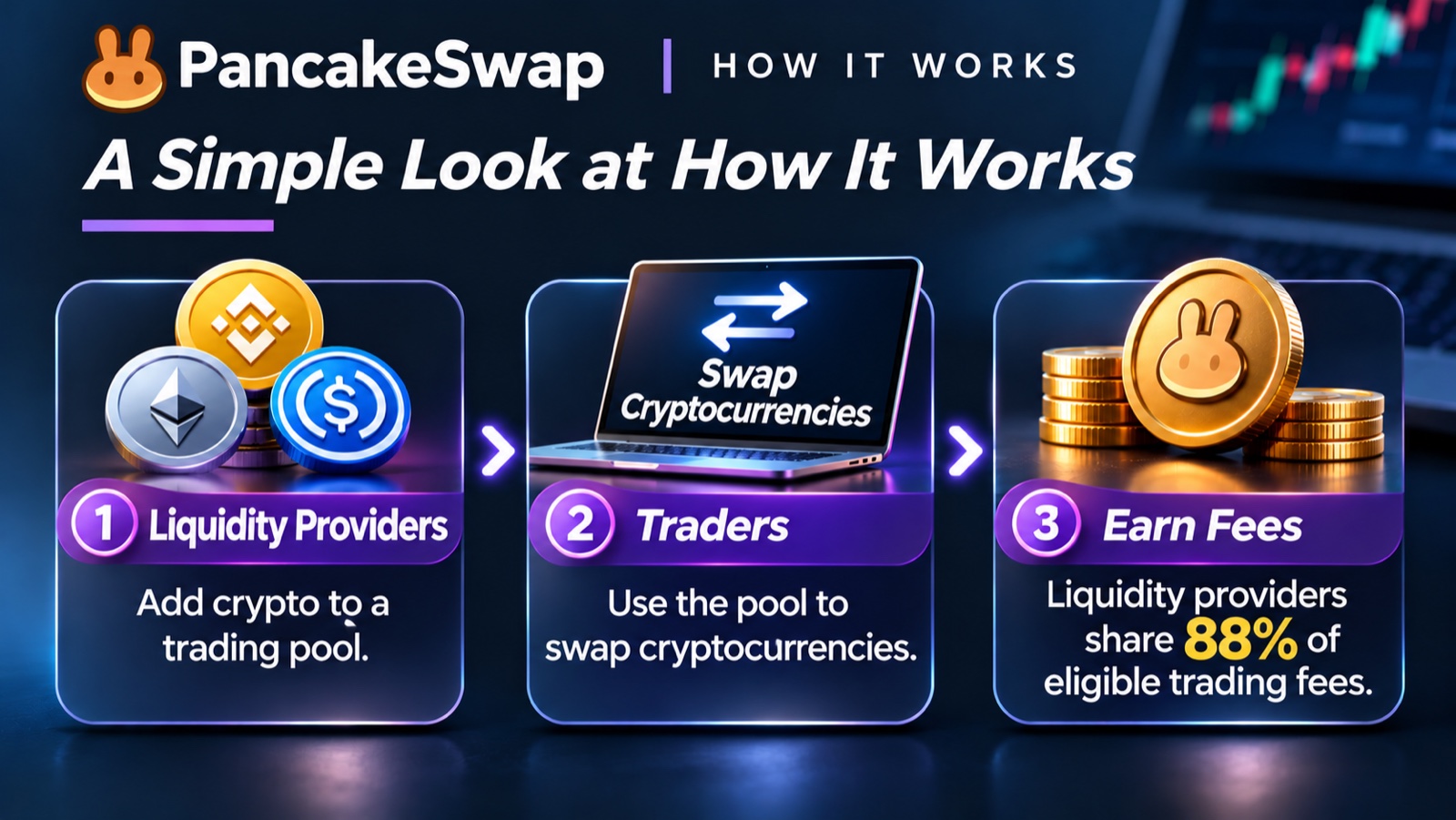
When someone makes a trade, a small fee is charged. Liquidity providers earn a portion of those fees.
Under the new program, liquidity providers receive 88% of eligible trading fees, while PancakeSwap keeps 12%.
For example, if an eligible trading pool generates $100 in fees, $88 goes to its liquidity providers and $12 goes to PancakeSwap's treasury.
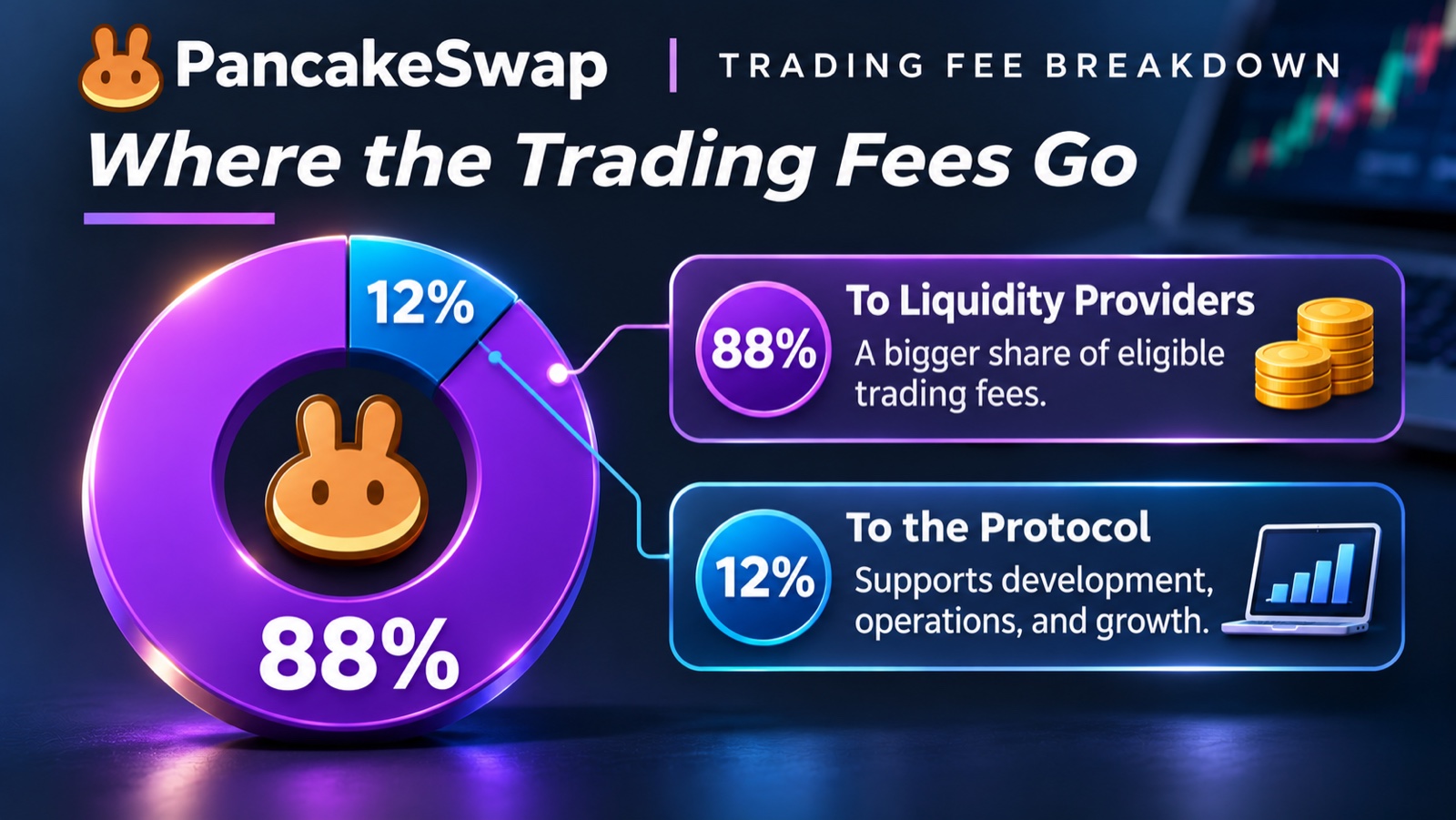
The 88% is shared among the liquidity providers. It is not a guaranteed investment return, and providing liquidity involves financial risks.
Why Is PancakeSwap Giving Away More of Its Fees?
The answer is competition.
PancakeSwap wants to attract more people willing to supply cryptocurrencies for trading.
More available cryptocurrency can make it easier for customers to trade, potentially at better prices.
By offering liquidity providers a larger share of the fees, PancakeSwap hopes to attract more participants and increase trading activity.
It's a simple strategy: Reward the people who help operate the exchange, and hopefully attract more customers.
What Does This Mean for Everyday Cryptocurrency Users?
Even if you never use PancakeSwap, this announcement shows how decentralized finance is changing traditional financial services.
Instead of relying entirely on a company to provide the money needed for trading, decentralized exchanges allow everyday cryptocurrency holders to participate.
Those who provide cryptocurrency can potentially earn fees, while traders may benefit from having more cryptocurrencies available to exchange.
Whether PancakeSwap's new approach attracts more users remains to be seen, but it offers another example of how blockchain technology is creating different ways for financial services to operate.
Sources
- PancakeSwap — November 12 rollout announcement
- PancakeSwap — The Flip: Liquidity Should Get Paid More
- PancakeSwap — October 2026 Kitchen Report
- PancakeSwap — Official Website
ABOUT TheCryptoList
TheCryptoList.net helps everyday users understand cryptocurrency through clear explanations, practical tutorials, and market updates.
Crypto Minus Confusion — Curated for Everyday Users.