Daylight Saving Time Ends Today: Why Do We Still Change Our Clocks?
A look at when the clocks change, why we do it, and how much of the year we actually spend on Daylight Saving Time.
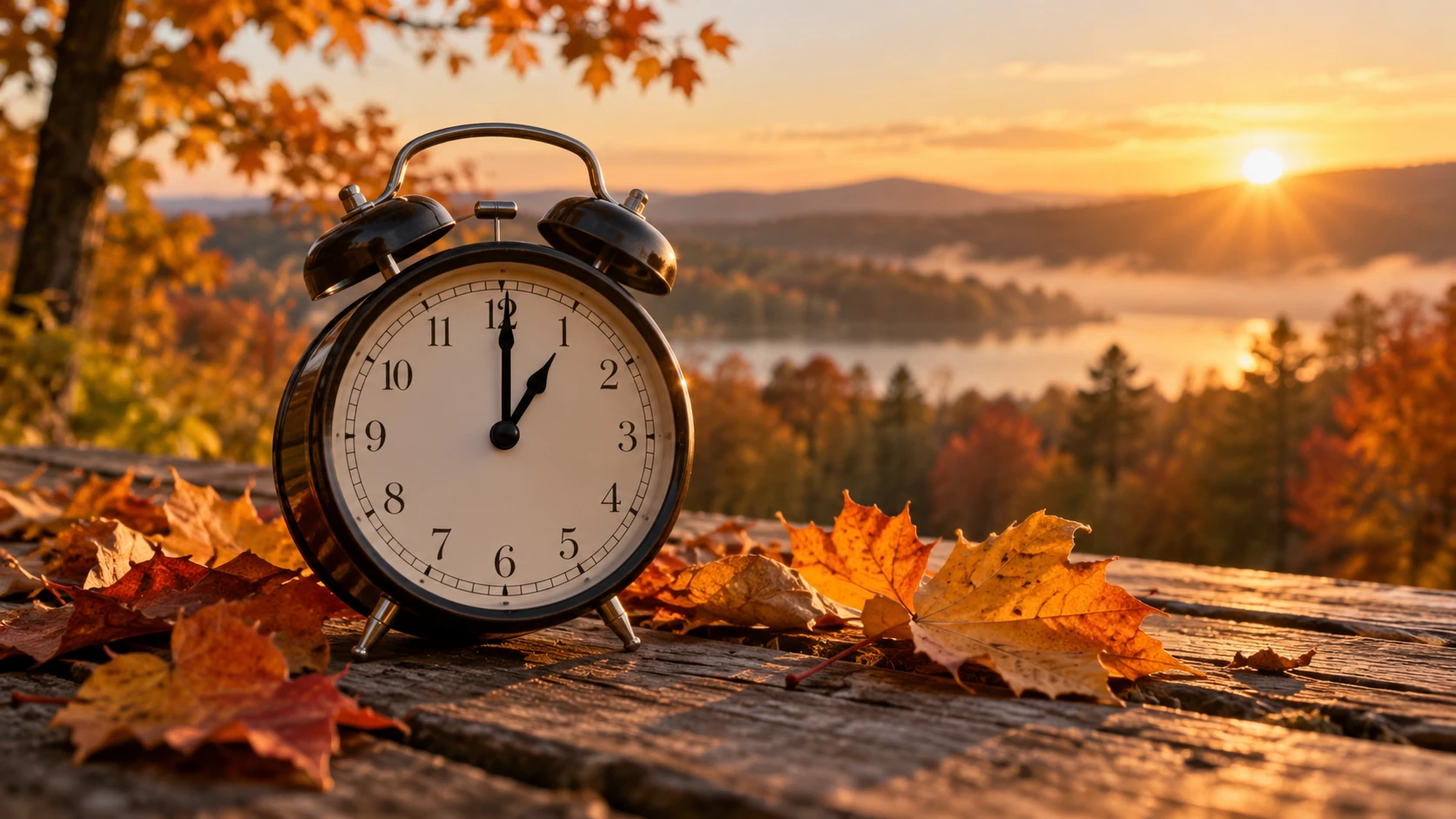
It's that time of year again. Across most of the United States, clocks moved back one hour early Sunday morning, November 1, 2026, marking the end of Daylight Saving Time.
At 2:00 a.m., clocks returned to 1:00 a.m., giving many Americans an extra hour of sleep.
The change also means earlier sunsets and darker evenings as we head toward winter.
But why do we still change our clocks twice a year?
When Does Daylight Saving Time Begin and End?
In the United States, Daylight Saving Time follows a schedule established by federal law:
- Second Sunday in March: Clocks move forward one hour.
- First Sunday in November: Clocks move back one hour.
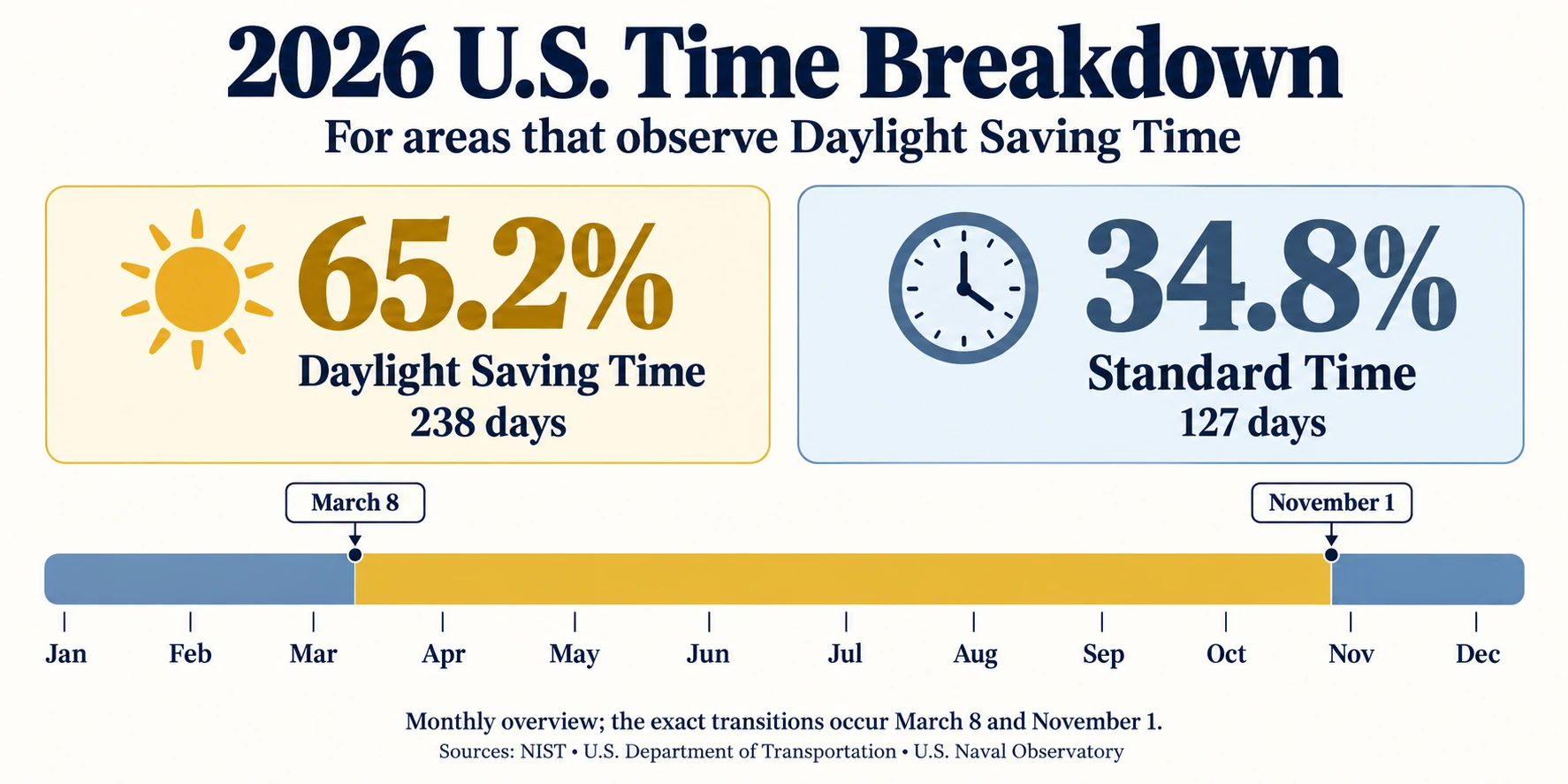
In 2026, Daylight Saving Time began on March 8 and ended on November 1.
The current schedule has been in effect since 2007, when the United States extended Daylight Saving Time by several weeks under the Energy Policy Act of 2005.
Before that change, Daylight Saving Time began in April and ended in October.
How Much of the Year Are We Actually on Daylight Saving Time?
Here's something that may surprise you: Americans in states that observe the clock changes now spend more of the year on Daylight Saving Time than on standard time.
| Time observed | Days | Share of year |
|---|---|---|
| Daylight Saving Time | 238 days | 65.2% |
| Standard Time | 127 days | 34.8% |
That means roughly two-thirds of the year is spent on Daylight Saving Time, while only one-third is spent on standard time.
Does Every State Change Its Clocks?
No. Hawaii and most of Arizona remain on standard time throughout the year.
The Navajo Nation, which extends across parts of Arizona, Utah, and New Mexico, does observe Daylight Saving Time.
Several U.S. territories, including Puerto Rico and Guam, also do not change their clocks.
When Will the Clocks Change Again?
The next Daylight Saving Time change is scheduled for Sunday, March 14, 2027, when participating areas will move their clocks forward one hour.
For now, Americans in most states can enjoy an extra hour this Sunday morning, even if it means saying goodbye to some evening sunlight.
And while the debate over changing clocks continues, one thing remains certain: unless the law changes, we'll be doing it all over again next spring.